
Published · 9 min read · 41,206 reads this week
I Was Wiped Out By 2pm Every Day. My Bloodwork Said "Normal." It Took 1 Number Most Panels Never Show Me To Find Out Why.

🩸 For 2 years, my body was telling me something was wrong.
For 2 years, my lab report told me everything was fine.
I want to walk you through how both of those things were true at the same time.
Because if you are over 45, tired in a way that sleep does not fix, and your doctor has ever looked at your panel and said "it's borderline, let's just watch it," then you are exactly who I was.
And I think you deserve to understand the thing it took me 2 years to learn.

Let me start with how it actually felt.
By 2pm I was done.
Not tired. Done.
The kind of fatigue where you read the same email 3 times and still could not tell you what it said.
I was bloated almost every afternoon, no matter how clean I ate.
A salad did it. A sandwich did it. Skipping lunch did it.
My midsection had gone soft and puffy in a way that 30 minutes on the treadmill never touched.
And I had this low, foggy hum behind my eyes that I had started to just accept as "me now."
💭 I was 53. So everyone had an explanation ready.
"It's your age."
"It's your metabolism slowing down."
"Welcome to your 50s."
I almost believed it. That is the part that still bothers me.

So I did the responsible thing. I went and got bloodwork.
I sat in that little chair, got my arm wrapped, and waited a week for the results like everyone does.
And the results came back "normal."
Mostly.
A couple of my liver values were what the doctor called "high-normal" and one was "a touch borderline."
He was kind about it. He said, and I am quoting him, "Nothing to panic about. Let's just keep an eye on it. Come back in a year."
So I left.
I had a piece of paper that said I was basically fine, and a body that felt like it was running on 40%.
I did what I think most of us do. I decided the paper was right and my body was being dramatic.
🌿 So I went to work on myself.
I cut my drinks down to almost nothing. Maybe one glass of wine on a weekend, if that.
I cleaned up my diet. More vegetables, less processed food, smaller portions.
I started walking every single morning. 7,000 steps before I even checked my phone.
I did everything the magazines and the doctors and the internet tell a 53-year-old to do.
And here is the honest, frustrating truth.
It barely moved the needle.
The 2pm crash still came. The bloating still came. The fog still sat behind my eyes.
I started to think the problem was me. That I was just weak, or lazy, or aging badly while other people seemed fine.
That self-blame is its own kind of exhausting.

The thing that finally changed everything was not a new symptom.
It was a conversation.
I was at a community health talk, the kind your local clinic runs, and afterward I cornered the speaker and described exactly what I just described to you.
The 2pm wall. The bloating. The "borderline but fine" labs.
And she asked me one question that reorganized everything I thought I understood:
"Did your bloodwork measure how your liver is doing, or did it measure whether your liver is already damaged?"
I had no idea those were different questions.
It turns out they are very different questions. And the gap between them is where I had been living for 2 years.
🔬 Here is what she explained, and what I have since read for myself.
A standard liver panel is built to catch disease.
The enzyme markers most panels show, the ones with names like ALT and AST, mostly spill into your blood when liver cells are already under real stress or breaking down.
In other words, those numbers are designed to flag a problem that has already advanced far enough to leak.
They are a smoke alarm. And a smoke alarm does not go off because the kitchen is getting warm. It goes off when something is actually burning.
So a number can read "normal," or sit at the high end of "normal" for years, while your liver is quietly working at the absolute ceiling of what it can handle.
The panel was not lying to me. It was just answering a question I was not actually asking.
I did not want to know "is my liver damaged yet."
I wanted to know "why do I feel like this." And those live in two different places on the same report.

This is the part I wish someone had drawn for me 2 years earlier. So let me draw it for you.
Your liver is not a filter. People say "filter," but that is the wrong picture.
Your liver is a processing plant. It has a queue.
Everything you eat, drink, breathe, absorb through your skin, and every medication you take, plus the hormones your own body produces, all of it gets routed through that liver to be processed.
And like any plant, it has a maximum throughput. A ceiling.
Most of the time, for most of your life, the queue stays comfortably below that ceiling. The work gets done. You feel fine.
But after 40, the inputs tend to climb and the throughput tends to soften.
More years of accumulated exposure. Slower processing. A queue that creeps closer and closer to the top.
🌿 And here is the mechanism that finally explained my exact symptoms.
When the queue gets full, your liver does what any overloaded system does. It triages.
It protects its survival jobs first, and it lets its "optional" jobs slide.
Revelation number 1: one of the first jobs it deprioritizes is converting stored energy into usable energy.
When that conversion slows, you get an afternoon where your tank just empties out and no amount of coffee refills it.
That was my 2pm crash. It was never a willpower problem. It was a throughput problem.
Revelation number 2: another job that slides is clearing the spent hormones your body is constantly retiring.
When hormone clearance backs up, the research suggests you can hold more fluid and more weight around the middle, the soft puffy kind that does not respond to the treadmill.
That was my bloated, soft midsection.
And a third: when bile flow gets sluggish, which can happen as the system stays loaded, digestion turns heavy and slow, and that "bloated no matter what I eat" feeling sets in.
That was the daily afternoon bloat.
Three symptoms I had blamed on my age. One underlying explanation.
My liver was sitting at its ceiling, and it had quietly stopped doing its optional jobs so it could keep doing its essential ones.
The labs could not see that, because at that point nothing was damaged yet. The queue was just full.

Think of a garden hose with the tap turned all the way open.
If the hose is clear, water flows.
If the hose is loaded and at its limit, you can keep the tap wide open and barely get a trickle out the other end.
The tap was my effort. The clean eating, the walking, the cutting back on wine.
I had the tap wide open. But I was pushing it through a system that was already at its ceiling.
That is why "doing everything right" did almost nothing. I was working on the wrong end of the hose.

Once I understood the queue, I finally understood why everything I had tried had failed.
Energy drinks and that extra afternoon coffee? Those just whip a tired system into working harder. They mask the crash for 90 minutes and then drop you lower.
The aggressive "3-day cleanse" everyone's cousin swears by? Mostly that empties you out and makes you feel virtuous. It does nothing for the daily processing load.
And the "push through it" advice? That is just teaching yourself to ignore the signal.
So I looked at actually supporting the liver itself. And this is where it got confusing fast.
🔬 I learned that a lot of liver supplements get 2 things wrong.
First, the single-ingredient ones. A standalone milk thistle pill might have a genuinely useful compound in it, but on its own many botanical compounds are notoriously poorly absorbed. You swallow it and most of it passes straight through.
Second, and this surprised me, the synthetic isolate route. A lot of products lean on lab-made synthetic isolates.
The catch is that a synthetic isolate is itself another compound your liver has to process. You are asking an already-loaded processing plant to take on more processing.
What actually made sense to me was the opposite approach.
Whole-plant compounds, made with organic ingredients, are the kind of input the liver's machinery is built to receive directly, without the front-end metabolic cost of breaking down a synthetic.
You are not adding to the queue. You are feeding the machinery the raw materials it already recognizes.
That single distinction is what pointed me toward what I take now.

What I landed on is called AlphaCleanse.
It is 12 ingredients, made with organic ingredients, in 1 daily formula. 2 capsules a day. That is the whole routine.
I am not going to tell you it is magic. I am going to tell you why each piece of it is in there, because understanding that is what convinced me to actually try it.
Let me walk you through the 12, the way I wish someone had walked me through them.

🌿 First, the anchor: Organic Milk Thistle, 165mg.
This is the most-studied botanical for the liver, full stop.
Its active compound is called silymarin, and it acts as an antioxidant, which means it may help neutralize the free radicals that contribute to oxidative stress on liver cells over time.
This is not a fringe ingredient. A systematic review found that silymarin supplementation may help improve liver enzyme levels.
That word "may" matters, and I will keep being honest with that word the whole way through. But the body of research behind milk thistle is exactly why it is the anchor of the formula and not an afterthought.

🌿 Second, the absorption pair: Organic Turmeric, 110mg, with BioPerine, 2.75mg.
Turmeric's active compounds are studied for antioxidant support, but on their own they are absorbed poorly.
BioPerine is a black pepper extract, and its entire job here is bioavailability. It can meaningfully increase how much of the active compounds your body actually takes up.
This is exactly the absorption problem I told you about earlier, solved on purpose inside the formula instead of left to chance.

🌿 Third, the adaptogen: Organic Schisandra Berry, 27.5mg.
Schisandra is an adaptogen that has traditionally been used for the liver, and modern interest in it is around whether it may help support healthy liver function.
It is one of those ingredients you do not see in the cheap formulas, and its presence is part of why this one read as serious to me.

🌿 Fourth, the flow group: Organic Dandelion Root 55mg, Organic Beetroot 55mg, Organic Burdock Root 27.5mg, and Organic Rhubarb Root 27.5mg.
Remember the sluggish bile flow and the heavy digestion I described?
This cluster is the one that maps to it. These roots have long been used to support bile flow and gentle, regular elimination.
If your liver's "optional" digestive jobs have been sliding, this is the group built to support that side of the queue.

🌿 And fifth, the broad antioxidant support: Organic Spirulina 110mg, Organic Reishi Mushroom 55mg, Organic Nettle Leaf 27.5mg, and Organic Ginger 110mg.
Each of these brings antioxidant and traditional supportive properties of its own.
Spirulina and reishi are dense, well-regarded sources of antioxidant compounds. Nettle has a long history in supportive herbal use. Ginger you already know.
Together with the milk thistle, this is the layer that addresses the oxidative load side of an overworked liver.
So that is the full 12.
An anchor, an absorption pair, an adaptogen, a flow group, and a broad antioxidant base.
Not a single isolated ingredient hoping to do everything. A formula built around how the liver actually works, made with organic ingredients the machinery receives directly.
See The Full Formula And What Buyers Reported →✓ 60-day money-back guarantee, risk-free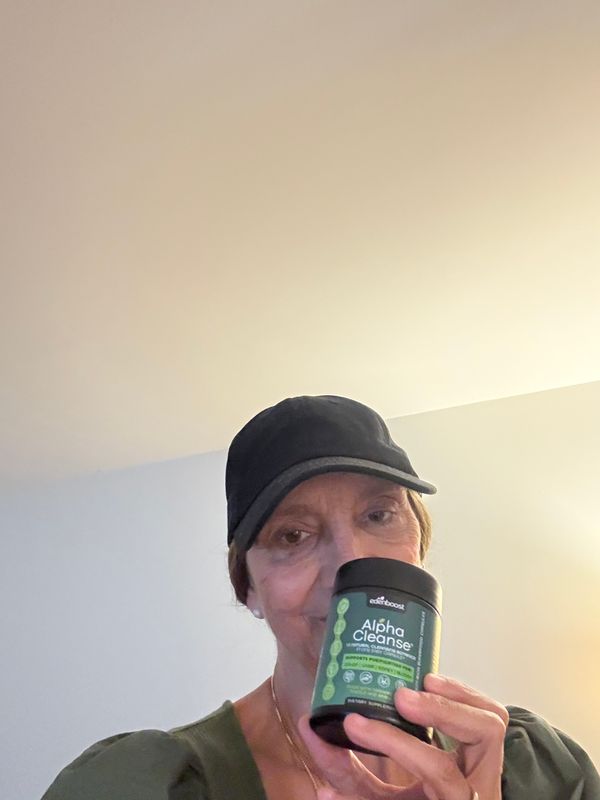
Now, what should you actually expect? Let me be careful here.
I cannot promise you a result. Nobody honest can.
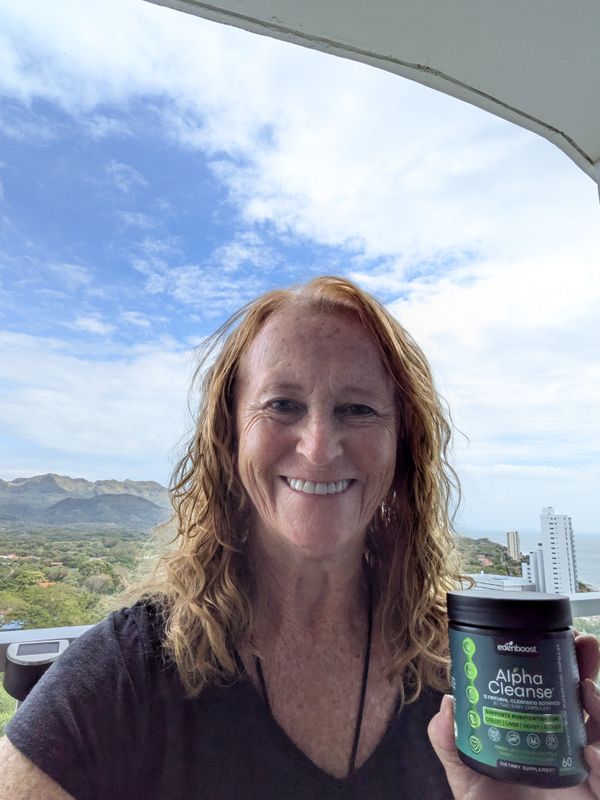
So instead of a promise, I am going to tell you what real, verified reviewers reported, in their own timing. The timeline below is illustrative, and individual results vary.
⭐ In the first 30 days or so, the most common thing reviewers describe is the energy and the fog.
Illustrative ordering, reviewer-reported timing. Individual results vary.
The honest pattern across the reviews is this: the energy and the fog tend to be what people notice first, and the lab confirmations tend to come on the reorder, on the longer timeline, when they go back and actually get retested.
That is the order I would set my own expectations in. Feel first. Confirm later.
🩸 Here is the part that mattered most to my skeptical side.
I did not want to take a supplement just because strangers online liked it.
So this is what a verified clinician had to say. He is validating the approach, not writing me a prescription, and I think the distinction is important.
Dr. Arthur Nahas, a family medicine physician with 43 years in practice, said this:
"For adults looking to support their liver, I suggest giving AlphaCleanse a try. One reason is because it contains milk thistle, one of the most studied botanicals for liver function. Milk thistle's active compound, silymarin, can work as an antioxidant that may help scavenge free radicals before they damage liver cells. This matters because ongoing oxidative damage can contribute to elevated liver enzyme levels over time. A systematic review found that silymarin supplementation may help improve liver enzyme levels. What's interesting about this blend is it also contains schisandra berry, an adaptogen that may help support healthy liver function, and turmeric with BioPerine, which can increase the bioavailability of its active compounds. I would gladly recommend AlphaCleanse as a supplement for proactive liver care.†"
Dr. Arthur Nahas · Family Medicine · 43 years in practice
When a man who has been practicing medicine for 43 years says the reasoning is sound, that did more for my confidence than any ad ever could.
Before
After
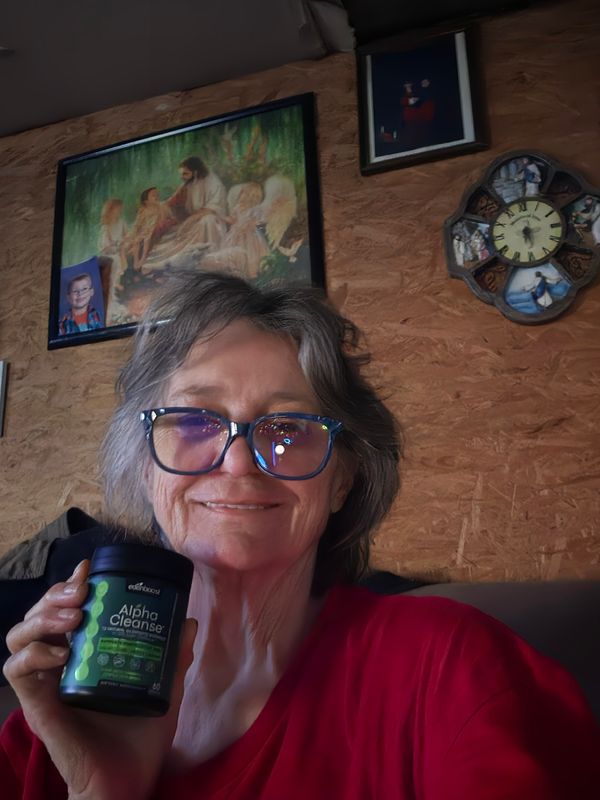
Illustrative of the pattern reviewers describe. Not a specific patient's results.
⭐ Let me give you the rest of the real people, because the specifics are what made me believe.

"My blood tests now show my liver function completely normal."
— Jason B. · Age 55-64 · Verified Okendo review

"My enzymes lowered dramatically, plus weight loss and an increase in energy."
— Rafael S. · Age 55-64 · Verified Okendo review

"My energy increased and my skin itching all but stopped."
— Jeff S. · Verified Okendo review
These are 6 different people. Different ages, different starting points, different symptoms.
What they share is that not one of them is telling you "I just feel better." Every one of them has a number, a timeline, or a specific symptom that changed.
That is the standard I held this to before I bought it. It is the standard I would hold it to for you.
AlphaCleanse holds 735+ verified reviews and a 4.7 star average. That is not a launch. That is a track record.
💬 What people are saying on Facebook


🛡️ So here is where I will leave you.
I am not going to invent a fake deadline or tell you there are only a few bottles left. That insults both of us.
Here is the only urgency that is actually real.
Every day your liver sits at its ceiling is another afternoon you lose to the 2pm wall, another day of the bloat, another day of the fog you have been told is just your age.
The queue does not clear itself while you wait for next year's bloodwork.
The number on that panel was never going to tell you when to start. It only flags the problem after it has advanced. You already have the information you need, which is how you feel.
The reason I can tell you to just try it is the guarantee.
That means you can take it daily for 2 full months, see for yourself whether your 2pm holds up and your afternoons get lighter, and if it does nothing for you, you send it back and you are out nothing.
There is also a modest reader discount available through the link below for anyone who came in through this article.
The risk is mine to carry, not yours. The only thing you actually risk by waiting is another year exactly like the last one.
👇 Start your 60 days here:
Try AlphaCleanse →✓ 60-day money-back guarantee, risk-freeI spent 2 years believing a piece of paper over my own body.
I hope it does not take you that long.
† These statements have not been evaluated by the Food and Drug Administration. This product is not intended to diagnose, treat, cure, or prevent any disease.
Individual results vary. Reviewer outcomes described are self-reported by verified purchasers and are not typical or guaranteed. The timeline is illustrative. Ingredient research referenced is general and does not constitute a claim about this product's effects.